
A small roof leak can sit unnoticed for months. By the time you see a ceiling stain, the damage underneath is already expensive.
Silicone roof coatings seal seams, flashings, and vents where most leaks start. A white reflective coating also bounces UV and heat, which can lower cooling costs during summer.
The application is simpler than most people expect. You pressure wash the surface, let it dry, and roll the coating on like paint.
Products like the HENRY HE587046 don’t even need a primer on a clean roof.
We compared 9 coatings from HENRY, Jetcoat, Dicor, and others for flat and low-slope roofs. Here’s how they ranked in our comparison chart.
Quick Comparison Chart
| # | Product | Our Rating | ||
|---|---|---|---|---|
| 1 |  |
HENRY HE587046 Roof Coating | ★★★★★ | Check Price |
| 2 | 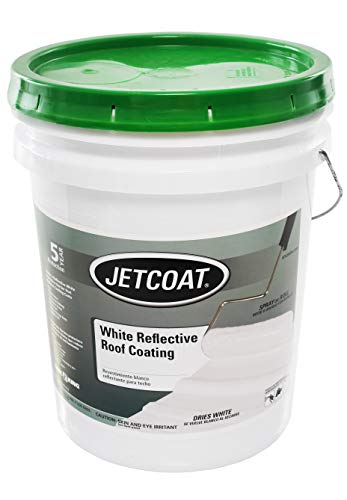 |
Jetcoat Cool King Reflective Acrylic Roof Coating | ★★★★☆ | Check Price |
| 3 | 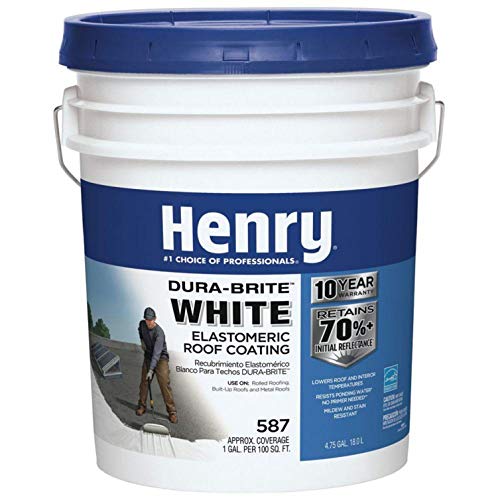 |
HENRY HE587372 Roof Coating, 5 Gal | ★★★★☆ | Check Price |
| 4 |  |
Dicor RPCRC1 EPDM Rubber Roof Coating (1 Gallon) | ★★★★☆ | Check Price |
| 5 |  |
KST Coating KS0063300-20 White Roof Coat (4.75 Gal) | ★★★★☆ | Check Price |
| 6 |  |
Rubberseal Liquid Rubber Roll-On Coating (1 Gallon) | ★★★★☆ | Check Price |
| 7 |  |
Liquid Rubber Waterproof Sealant (Black, 1 Gallon) | ★★★★☆ | Check Price |
| 8 |  |
Liquid Rubber Foundation Sealant (Black, 5 Gallon) | ★★★★☆ | Check Price |
| 9 |  |
Ames Blue Max Liquid Rubber | ★★★★☆ | Check Price |
What Stood Out Across These Picks
These nine coatings range from true silicone formulas that handle ponding water to acrylic elastomerics that prioritize reflectivity on a budget. The biggest performance gap shows up in how each coating handles standing water and substrate flexibility over multiple seasons.
Check the per-gallon coverage and substrate compatibility in each review to avoid buying the wrong chemistry for your roof type.
1. HENRY HE587046 Roof Coating — Best Overall
A HENRY brand brush-grade roof coating built to seal flashings, vents, and seams on residential flat roofs.
- Brush-grade consistency fills seams and flashings cleanly
- Elastomeric formula expands and contracts without cracking
- Reflects about 91% of solar energy off the roof
- No primer required on new or well-maintained roofs
- Allows moisture vapor to vent from the substrate
- Coverage per gallon is less than spray-applied coatings
- Brush application is labor intensive on large roofs
HENRY 587046 earns the top pick because it’s the one you want around the tricky parts of a roof. Flashings, vents, and parapet seams are where leaks start, and a brush-grade coating fills those corners in a way spray cans never quite manage.
The elastomeric formula handles the real-world problem of a roof that’s constantly moving. As the substrate heats and cools through the day it expands and contracts, and HENRY stretches right along with it instead of cracking at year two.
One nice touch: you don’t need a primer on a new or well-kept roof. That saves a whole day of prep, especially if you’re fighting the calendar to get the coating down before a rain window closes.
2. Jetcoat Cool King Reflective Acrylic Roof Coating — Best Value
Jetcoat Cool King is a reflective white acrylic roof coating designed to bounce sunlight and lower attic heat.
- Reflects sunlight to cut attic heat and cooling bills
- Works on metal, asphalt, masonry, polyurethane, and wood
- Forms a rubber-like membrane over varied roof surfaces
- Five-year protection window between recoats
- Budget-friendly compared to true silicone coatings
- Acrylic base is less durable than true silicone in standing water
- White finish picks up dirt and discoloration over time
Jetcoat Cool King is the pick when you need to cover a lot of roof on a budget. The acrylic elastomeric chemistry isn’t as tough as silicone in a puddle, but for a well-draining roof that just needs a reflective coat, it’s plenty.
Five-year protection per application is the number that matters here. That’s long enough to more than pay back the cost in cooling savings if you’re in a hot climate, and short enough that you’re not betting the house on one contractor’s workmanship.
It plays nice with asphalt, metal, masonry, wood, and polyurethane. For a mixed-surface job like a house with a flat porch roof and metal flashing, one can does both instead of splitting into two products.
3. HENRY HE587372 Roof Coating, 5 Gal
A 5-gallon pail of HENRY HE587372 roof coating, sized for medium roof projects without buying multiple containers.
Pros
- 5 gallon Henry white roof coating
- Sized for medium roof projects
- Simple easy-use application kit
- Trusted Henry brand heritage
- 5-gallon pails are heavy to haul up to a roof
- Open container has limited shelf life once started
Henry HE587372’s 5 gallon pail sizes for medium roofing projects without needing to combine multiple smaller containers during application. The Henry brand carries decades of roofing product heritage that no-name alternatives can’t match.
Simple application kit works straight from the pail without special equipment. Five-gallon pails run heavy during roof hauling, so plan for a partner or hoist system on steep-pitch roofs.
Against the rank-1 Henry HE587046 or the rank-2 Jetcoat Cool King reflective acrylic, the HE587372 5-gallon covers mid-sized jobs where the 1-gallon or specialty reflective alternatives don’t fit the project scope.
4. Dicor RPCRC1 EPDM Rubber Roof Coating (1 Gallon)
Dicor RPCRC1 is a 1-gallon white EPDM rubber roof coating, popular for RV roofs and small flat sections.
- Made specifically for EPDM rubber RV roofs
- Acrylic formula ready to roll on straight from the pail
- Roughly 125 sq ft per gallon over two coats
- No harsh petroleum distillates or abrasives
- Superior weatherability and UV resistance
- EPDM compatibility is narrower than universal coatings
- 1-gallon size only covers a small area
Dicor is RV-specific, and that focus is the whole point. An EPDM membrane has different surface chemistry than a residential flat roof, and a generic coating can fail to adhere or wrinkle at the seams.
Coverage sits around 125 sq ft per gallon over the recommended two coats. For a typical travel trailer that’s a gallon or two, maybe three for a big Class A, so you can plan exactly what you need without buying a huge pail.
Dicor also doesn’t load the formula with harsh petroleum distillates or acid ingredients, which matters because those are the things that’ll eat your rubber membrane before the coating even gets a chance to bond.
5. KST Coating KS0063300-20 White Roof Coat (4.75 Gal)
KST Coating KS0063300-20 in a 4.75-gallon white finish, designed for asphalt and built-up roof systems.
- Saves up to 35% on cooling costs through reflectivity
- Stays flexible from -10 to 160 degrees Fahrenheit
- Mildew and algae resistance built into the resin
- Works on concrete, foam, brick, metal, and cement tiles
- 4.75-gallon size handles most residential flat roofs
- Asphalt-roof focus limits use on metal or membrane roofs
- Application needs warm dry weather
KST’s advertised 35% cooling-cost savings is on the aggressive end of what you’ll see, but the reflective white finish does lighten the load on the HVAC in the dog days of summer. It works much the same way good colored silicone caulk seals smaller joints: fill the gap, block the water.
The flex range of -10 to 160F covers just about any climate this side of Antarctica. That’s the number that really matters because a coating that stays soft in winter is one that won’t crack when you step on it in February.
It plays with concrete, foam, brick, metal, and even aged aluminum roofs. For a mixed patchwork of surfaces, that flexibility is convenient even if premium silicone still beats it on ponding water.
6. Rubberseal Liquid Rubber Roll-On Coating (1 Gallon)
A 1-gallon white roll-on liquid rubber coating from Rubberseal, designed to be applied with a paint roller.
- Energy Star certified for heat-reflective roofing
- Water-based, cold applied, low VOC formula
- Outstanding chemical, elongation, and puncture resistance
- Seamless membrane bonds tightly to varied substrates
- Rolls on like paint with no torch or solvents
- Single coat coverage is limited compared to brush-grade options
- Roller application leaves visible texture lines
If you’re not comfortable swinging a torch or working with solvents, Rubberseal is the most approachable option on the list. It’s water-based, cold-applied, and rolls on with a standard paint roller.
The Energy Star certification confirms what the white finish suggests. You’re getting meaningful heat reflection, and the chemistry is low-VOC enough that you won’t be gassing yourself on a windless day.
Elongation and puncture resistance are both genuinely strong here. On a flat roof that sees hailstorms or the occasional dropped tool, that’s the difference between a durable finish and a patching job next summer.
7. Liquid Rubber Waterproof Sealant (Black, 1 Gallon)
A 1-gallon water-based liquid rubber sealant in original black, suitable for both indoor and outdoor coating jobs.
Pros
- 1 gallon water-based liquid rubber sealant
- Industrial strength bitumen formula
- 950% elongation for building movement
- No VOCs or harmful odors for indoor and outdoor use
- Black color isn't reflective like white roof coatings
- Water-based formula needs dry weather to cure
Liquid Rubber’s 1 gallon black sealant creates a seamless waterproof membrane on flat roofs, metal roofs, low-slope roofs, gutters, foundations, and concrete planters. The water-based formula applies indoors and outdoors without the VOC exposure that solvent-based products force.
Coverage runs 15 square feet per gallon on flat roofs (across 3 to 4 heavy coats for a 60 to 80 mil membrane). Application handles brush, roll, or spray tooling based on project scope.
950% elongation tolerates seasonal building movement without cracking or peeling.
8. Liquid Rubber Foundation Sealant (Black, 5 Gallon)
A 5-gallon black foundation and basement sealant from Liquid Rubber, sized for full crawlspace and below-grade jobs.
Pros
- 5 gallon black foundation and basement sealant
- 900% elongation for flexibility in all temperatures
- 50 sq ft per gallon on interior basement surfaces
- Compatible with concrete, masonry, wood, and metal
- Designed for foundations, not really a true roof coating
- Heavy 5-gallon pail is hard to lift and pour
Liquid Rubber’s 5 gallon Basement and Foundation Sealant handles full crawlspace and below-grade waterproofing projects where smaller pails run out mid-job. Professional-grade 900% elongation maintains flexibility through temperature swings from freezing basements to hot summer slabs.
Application temperature ranges from 50F to 90F, with 2 to 3 coats on interior surfaces and 3 to 4 coats on exterior concrete. Compatibility spans concrete, masonry, wood, and metal, so the same pail handles mixed-material foundations without switching products.
9. Ames Blue Max Liquid Rubber
Ames Blue Max is a stretchable liquid rubber coating known for bridging cracks in flat roofs and walls.
- Stretches up to 1200% to bridge cracks without tearing
- Flows into seams as a liquid and sets into flexible rubber
- Air-barrier membrane discourages mold and mildew
- Highly adhesive on basement walls, cisterns, and foundations
- Stays flexible in extreme hot and cold
- Pricier per gallon than basic acrylic alternatives
- Bright blue color before curing can be alarming
Ames Blue Max is for the wet and ugly jobs. Basement walls that weep every spring, cisterns that need to hold water, below-grade foundations where you can’t afford a leak, this is where 1200% elongation earns its keep.
The liquid flows into cracks before it sets, which is the whole trick. Brush it on and it wicks into hairline fractures, then cures into flexible rubber that moves with the substrate instead of breaking off.
Yes, it’s bright blue until it cures. Don’t panic, it darkens as it sets, and the flexibility and adhesion are what you’re actually paying for here, not the color.
Frequently Asked Questions
Can I use the same silicone roof coating on my RV and my house?
Not always, since RV roofs are usually EPDM rubber, TPO, or fiberglass and they need coatings that bond specifically to those surfaces (Dicor RPCRC1 is made for EPDM). A house roof with asphalt or metal substrate requires a different formulation, so always match the coating to your specific roof material before purchasing.
How long does silicone roof coating last?
A properly applied silicone coating on a flat or low-slope roof typically lasts 10 to 20 years, and silicone formulations tend to outlast acrylics, which usually top out at 7 to 10 years before needing a recoat. Proper surface prep and applying the correct thickness are the two biggest factors that determine whether you land at the short or long end of that range.
Does silicone roof coating really block UV damage?
Yes, that’s one of the main reasons to use it since white silicone and acrylic coatings reflect 80 to 90 percent of incoming sunlight, keeping the roof membrane underneath cooler and slowing UV breakdown. The reflective surface also reduces cooling costs during summer months, which helps the coating pay for itself over its lifespan.
How many coats of roof coating do I need?
Two coats is the standard for most silicone and acrylic systems since the first coat soaks into the substrate and seals small pores while the second builds thickness and delivers the advertised waterproof performance. Let each coat cure fully before applying the next, which typically takes 4 to 24 hours depending on temperature and humidity.
Can I apply silicone roof coating in cold weather?
Most silicone coatings cure properly between 50 and 90 degrees Fahrenheit, and below 50 degrees the coating stays tacky for days and won’t cross-link into a waterproof film. Plan your application for a stretch of mild, dry weather with no rain in the forecast for at least 24 hours after the final coat goes on.
Do I need to clean the roof before coating it?
Yes, always, since dirt, moss, algae, and old adhesive residue will prevent the coating from bonding to the roof membrane properly. Power-wash the surface and let it dry completely before applying the first coat, because even a thin film of grime creates a weak layer that causes the coating to peel within a year.
Final Thoughts
The HENRY HE587046 Roof Coating takes the top slot because the Henry brand has been the standard in commercial flat-roof coatings for decades. Long-life UV resistance also handles the southern-exposure heat that ages cheaper coatings within a year.
The Jetcoat Cool King Reflective Acrylic Roof Coating is the value pick for budget-friendly reflective roof work. Same general performance at a lower price tier than the premium silicone Henry options.
The HENRY HE587372 5-Gallon Roof Coating is the right call for larger jobs that need volume coverage. Same Henry quality at a bulk size that makes the per-gallon cost realistic for full-roof projects.
For any roof work, prioritize your safety by calling a qualified roofer rather than DIYing a steep or high roof. Get several detailed quotes to compare services, prices, and warranty terms before committing to a coating job that should last a decade or more.
Overall, the price of cleaning your roof will vary depending on the area of the roof, the types of cleaning and the treatments carried out.
Price estimates are on a range that is different, depending on the type of roof.
Your roof will then be protected for five to ten years, or even more depending on the products and techniques used.