 roundup
 10 Silicone Chopsticks for Kids and Non-Slip Gripping
Silicone chopsticks rated for cooking heat up to 446F, non-scratch tips, and grip. 12-inch cooking pairs and kid training sets ranked across brands.

Silicone baking molds, cooking utensils, food storage, and drinkware reviewed and compared.

We may earn a small commission through links on this page, at no extra cost to you. As an Amazon Associate, we earn from qualifying purchases. Ratings reflect our own editorial evaluation.
Walk into most modern kitchens and you'll find silicone everywhere plastic and metal used to live. Spatulas that flex into the corner of a mixing bowl. Containers that squish flat when they're empty. Baking mats that replaced parchment paper three years ago and still look new.
Part of this is driven by the growing pile of research showing plastic utensils shed microplastics into hot food. Once people started reading those studies, silicone stopped looking like a gimmick and started looking like the obvious upgrade.
This guide runs through every silicone kitchen category you're likely to shop for, what works, what doesn't, and how to tell a real food-grade product from a knock-off that'll smell weird after a month in the oven.
You don't need to replace everything at once. Most people start with one or two pieces and keep swapping out the old stuff as it wears down. By the time the last plastic spatula is gone, the kitchen runs cleaner and nothing's leaching into dinner anymore.
New silicone products show up constantly. Some are genuinely useful, some are gimmicks with a fancy photo. The sections below separate the two so you're not guessing at the checkout.
Quick answer: food-grade silicone is a purified polymer made from silica that the FDA has approved for food contact at both freezing and oven temperatures.
The raw material starts as silica — the same stuff in sand and quartz. Manufacturers bond it with oxygen, carbon, and hydrogen to create polydimethylsiloxane (PDMS), which is the base compound behind every food-safe silicone product on the market.
The U.S. Food and Drug Administration regulates food-grade silicone under Code of Federal Regulations Title 21, Section 177.2600. Products meeting this standard have been tested and certified for direct contact with food and beverages at temperatures ranging from deep-freeze cold to oven-level heat.
Industrial silicone used for caulking and automotive gaskets skips the extra purity testing that food-grade has to pass. Food-grade gets tested for BPA, lead, latex, and phthalates, and it has to come out clean. It's also chemically inert, which is a fancy way of saying tomato sauce and lemon juice don't react with it.
The feel gives it away. Rubbery but firm. It bounces back when you bend it, doesn't hold stains from turmeric or beet juice, and doesn't pick up smells between uses the way cheap plastic does.
Platinum-cured silicone is the top tier. It uses a platinum catalyst during curing instead of peroxide, which means no leftover byproducts that could eventually migrate into food when heated.
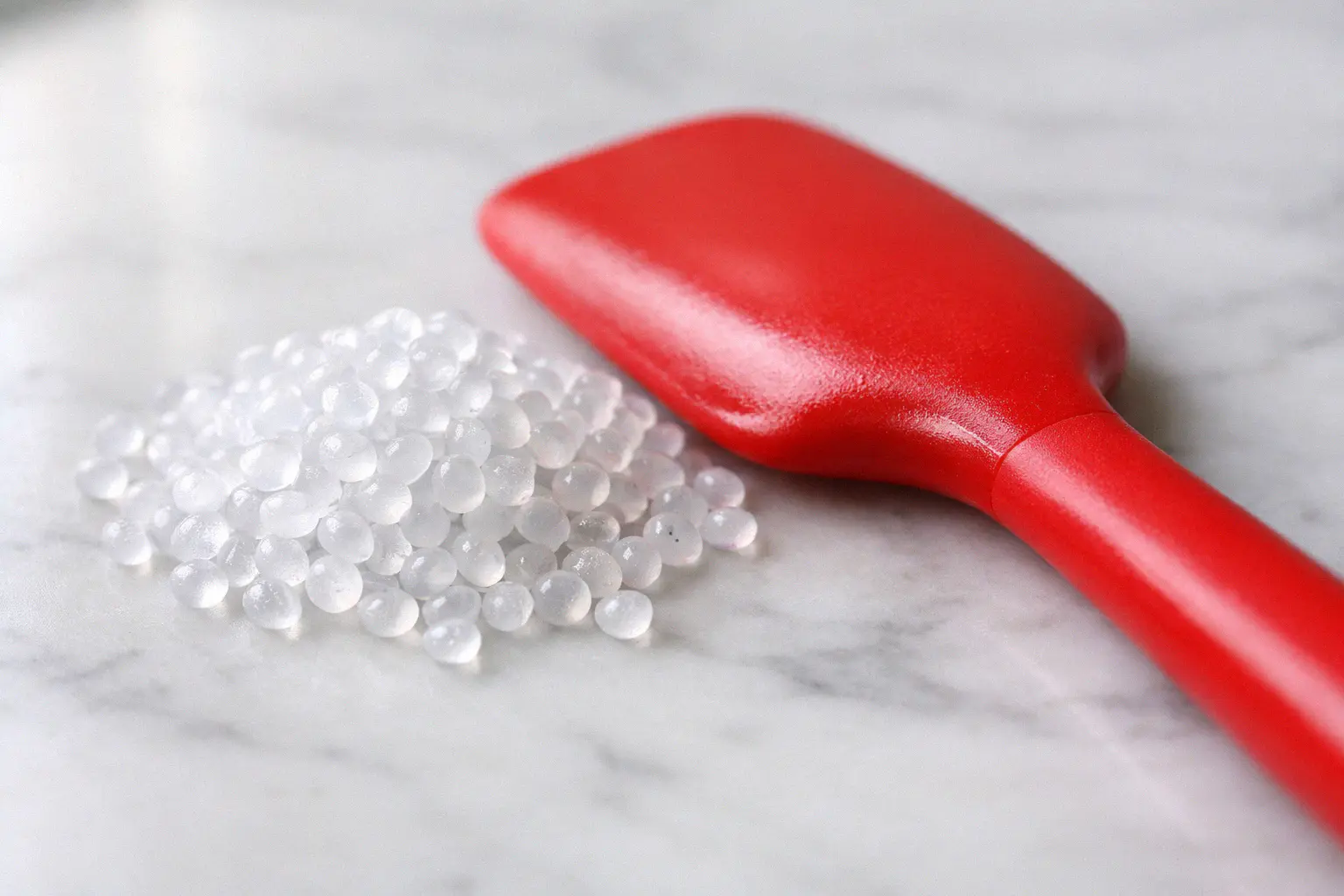
Peroxide-cured silicone is cheaper and way more common. It's still food-safe when made right, but those leftover peroxide traces can give it a faint smell on first use. Platinum-cured skips that entirely.
Why it matters: not every product with "silicone" on the label actually hits food-grade standards. The sections below show you how to spot the real thing and avoid the ones cutting corners with fillers.
Same material is used in medical devices and baby products. If it's safe enough for surgical implants and infant pacifiers, it's safe enough for your baking mat.
Six main categories to know: cooking utensils, bakeware, baking mats, food storage, molds, and kitchen gadgets. Each one replaces something less durable or less safe.
Silicone kitchen gear goes way beyond spatulas and spoons. Understanding what each type does helps you build a collection that covers every task without buying duplicates.
This is where most people start. Silicone cooking utensils include spatulas, spoons, turners, tongs, whisks, ladles, and pasta servers — most with a stainless steel internal core wrapped in a silicone exterior for the right balance of rigidity and softness.
The better brands -- OXO Good Grips, GIR (Get It Right), di Oro -- use seamless one-piece construction that gets rid of the joints where bacteria, grease, and food gunk love to hide. That's a real upgrade from budget sets where the silicone head just plugs into a plastic handle and eventually works loose.
Temperature ratings on silicone cooking utensils usually fall between 400 and 600 degrees Fahrenheit. That range covers gentle sauteing through high-heat cast iron searing, so one set handles pretty much any stovetop job you throw at it.
Flexible edges on silicone turners and spatulas follow the curve of pans, bowls, and pots. You can scrape out every last bit of sauce or batter without fighting the stiffness of metal or worrying about wood splintering into your food.
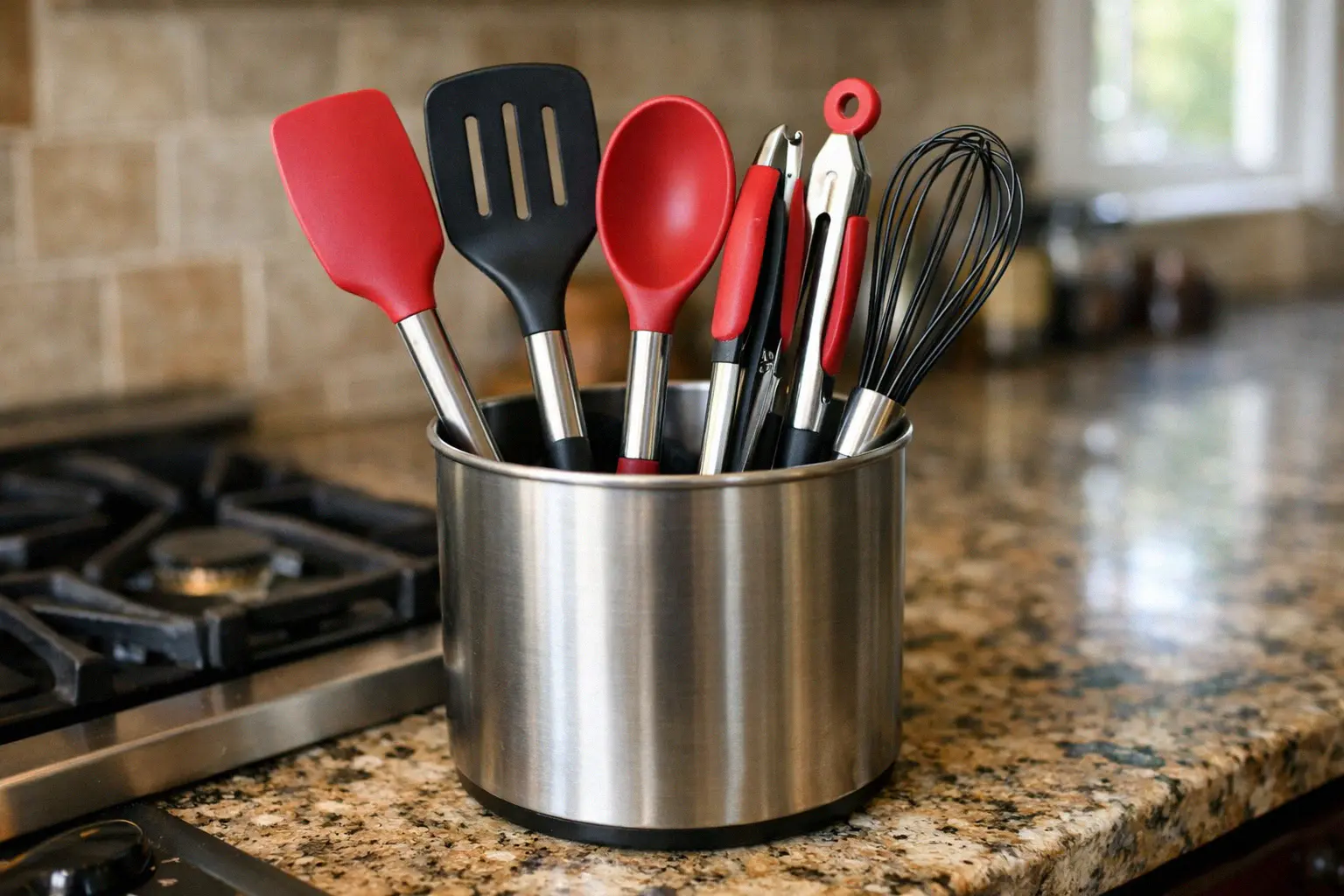
Worth calling out separately: silicone whisks. Metal tines scratch non-stick and ceramic-coated pots when you're making sauces and gravies — silicone-coated whisks deliver the same mixing action without damaging the cooking surface underneath.
If you're building a silicone utensil set from scratch, start with a solid spatula, a slotted turner, a deep spoon, and locking tongs. Those four tools handle the vast majority of daily cooking tasks.
Muffin trays, cake molds, loaf pans, bundt forms, donut molds — silicone bakeware covers all of it. The inherent flexibility lets you pop baked goods out cleanly without greasing, prying, or risking crumbled edges.
Most silicone bakeware handles continuous oven heat up to 450 degrees Fahrenheit. You can pull it straight from the freezer into a hot oven without cracking -- try that with glass or ceramic and you're cleaning up shards. The same flexibility applies to specialty shapes like springform pans, round cake pans, and pizza pans.
Fair criticism: silicone bakeware is floppy compared to metal pans. Easy fix -- set a silicone muffin tray on a sturdy metal baking sheet. You get the rigidity for safe oven handling and even heat distribution without giving up any of the silicone advantages.
Silicone cake molds hold intricate shapes -- roses, geometric patterns, character designs -- that metal pans can't touch at consumer prices. The non-stick release means you can skip the flour-dusting step before pouring batter, too.
Silicone baking mats are basically reusable parchment paper. One good mat lasts through thousands of uses, which cuts an ongoing expense and means less waste in your trash can.
They give you a naturally non-stick surface for cookies, pastries, roasted vegetables, anything that hits a sheet pan. They also double as kneading surfaces for bread dough and rolling surfaces for pie crust, similar to a dedicated silicone fondant mat -- one mat, multiple jobs.
Standard half-sheet mats fit most home ovens. Quarter-sheet and full-sheet sizes exist for toaster ovens and commercial setups. Perforated versions built for bread baking let air circulate under the dough for crispier crusts.
Air fryer silicone liners took off once air fryer ownership crossed 60 percent of American households. The perforated designs protect the basket from scratches and stuck-on food without blocking the airflow that makes air frying actually work.
Reusable bags, stretch lids, and collapsible containers round out the silicone food storage world. They're straight replacements for single-use plastic wraps (see our silicone plastic wrap reviews), disposable zip-lock bags, and those rigid plastic containers that stain permanently and crack after a year.
Silicone stretch lids and cup lids seal airtight over bowls, cups, cans, and cut fruit in various sizes. They hold up in both the fridge and freezer without going brittle or losing their stretch -- something plastic lids can't say after a couple dozen freeze-thaw cycles.
Collapsible silicone containers squish down to about a third of their full height when empty. If you're short on cabinet space, that alone sells it. They're microwave-safe, dishwasher-safe, and leak-proof when locked. Parents have jumped on silicone baby food storage containers for the same durability and safety reasons.
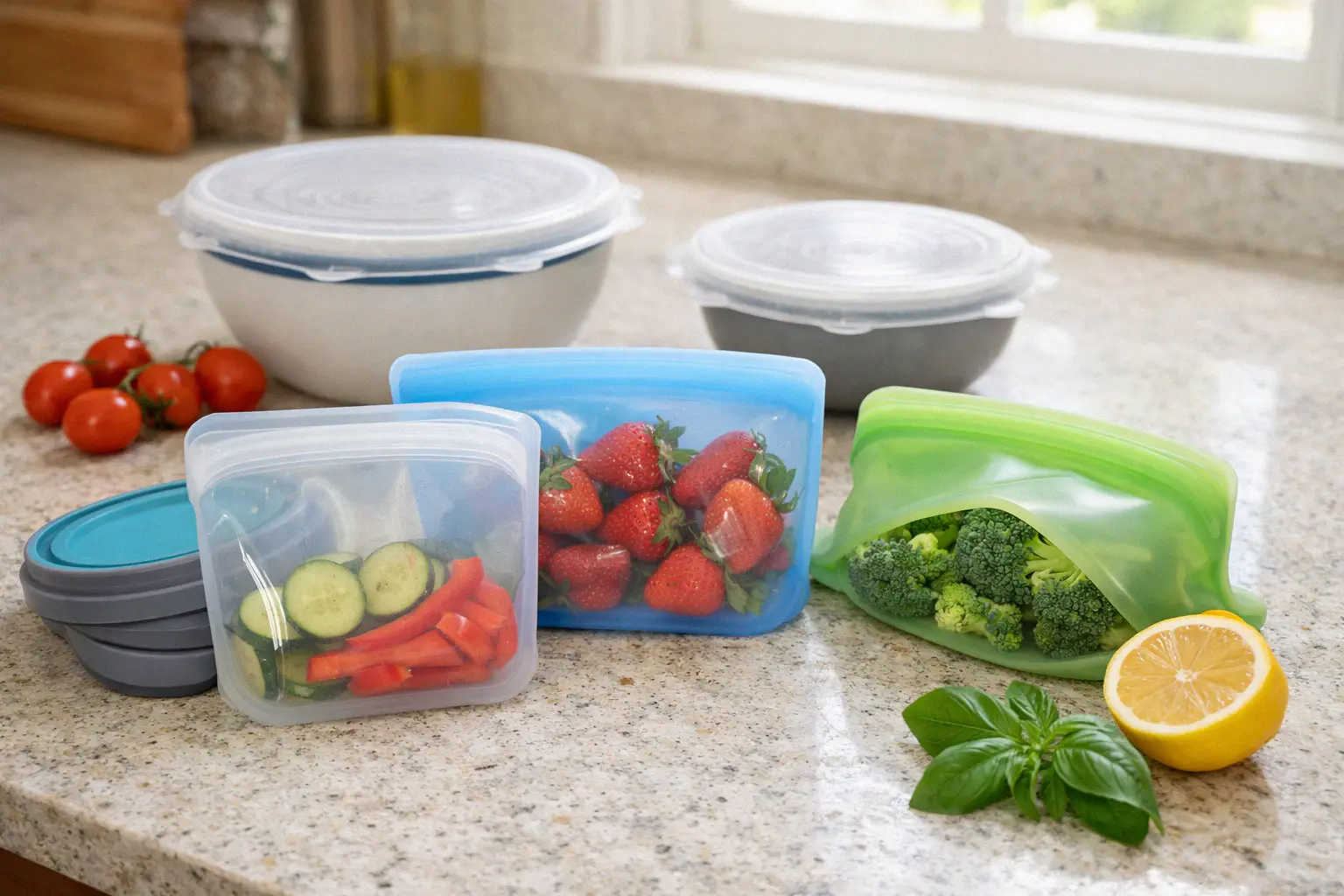
Sous vide cooking has opened up yet another use case for silicone food storage bags. Unlike standard zip-lock bags that can leach chemicals in heated water baths, food-grade silicone bags handle the sustained low-temperature submersion that sous vide requires without any material breakdown.
Silicone ice cube trays with lids have also become a kitchen staple, producing uniform cubes that release cleanly with a simple push. They stack neatly in the freezer and won't absorb freezer odors the way old plastic trays do. Sippy cup lids and straw tips round out the drinkware storage accessories worth considering.
For a closer look at how silicone performs in drinkware and portable storage, see our reviews of the best silicone drinking cups and best silicone bottles.
From ice cubes and chocolates to candies, gummy vitamins, soaps, and even concrete crafts — silicone molds come in hundreds of shapes. Popular options include holiday-themed molds, letter molds, fish molds, and dice molds for resin and candy making. Flexibility makes demolding effortless, even for designs with deep undercuts or fine detail.
Silicone pastry brushes outperform natural-bristle brushes in every measurable way. They don't shed fibers into food, don't absorb oils or marinades between uses, and clean completely with a quick pass under running water.
Other specialty silicone kitchen tools include egg poaching pods, garlic peelers, jar openers, splatter guards, pot handle covers, and heat-resistant trivets. Each tackles a specific problem that other materials handle poorly or not at all.
Silicone stove top protectors guard glass and ceramic cooktops from scratches, spills, and burned-on residue. They sit flat on the surface during cooking prep and peel away for easy cleaning afterward.
Here's one that surprised me: silicone oven mitts and pot holders grip far better than fabric alternatives, especially when wet. A silicone spoon rest next to the stove is another small upgrade that makes a noticeable difference. Fabric oven mitts lose their heat protection when damp, but silicone maintains consistent insulation regardless of moisture.
Sink strainers, drain covers, and silicone drying mats round out the accessories category. These small-ticket items show just how far the material's thermal stability, flexibility, and non-slip grip extend beyond cooking itself.
Heat resistance up to 600 degrees, non-stick surface protection, stain resistance, easy cleaning, serious durability, and less kitchen waste. Those are the big ones.
Silicone didn't take over kitchens on hype. Every advantage it has addresses a specific, annoying limitation of plastic, wood, metal, or nylon.
Good silicone kitchen tools handle sustained temperatures from -40 to 600 degrees Fahrenheit, depending on the formulation. Deep-freezer storage to high-heat wok cooking, all without the material breaking down.
Plastic utensils start melting or warping between 250 and 350 degrees. Nylon breaks down above 400 and can release fumes at its failure point. Silicone skips both problems entirely -- holds its shape, color, and structure no matter where you are in that temperature range.
Metal utensils scratch Teflon, ceramic, and enamel coatings within weeks of regular use. Even silicone cutting boards protect countertops and knife edges better than hard plastic. Those scratches expose the base material and accelerate non-stick breakdown, which shortens the life of pans you paid good money for.
Silicone is soft enough to glide across any non-stick surface without leaving marks. GIR, for example, engineers their spatula edges thin enough to scrape a pan spotless without the concentrated pressure that chews up coatings.
Silicone's non-porous surface shrugs off tomato sauce, turmeric, beet juice, curry powder, and other staining nightmares. A normal wash with dish soap clears discoloration that would permanently set into wood, bamboo, or plastic.
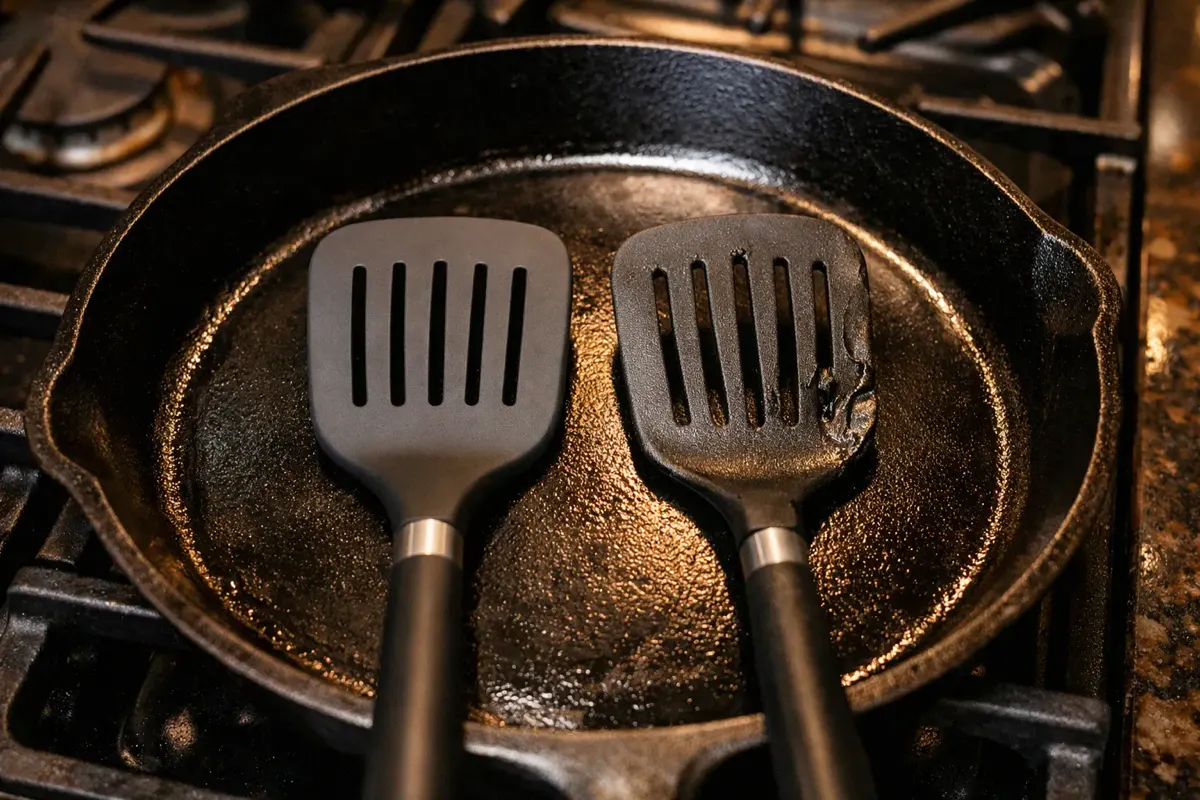
Wood absorbs colored liquids into its grain, and plastic picks up a permanent yellow or orange tinge after repeated exposure to strongly pigmented foods. Silicone stays visually neutral meal after meal, which matters when you're switching between savory and sweet preparations.
One-piece silicone construction gets rid of the joints, rivets, and screw holes where mold and bacteria set up camp in traditional utensils. No crevices, no hiding spots.
Every major brand makes their silicone kitchen products dishwasher-safe. Hand washing takes seconds -- warm water and dish soap, done. Food residue slides off instead of bonding to the surface.
A decent silicone spatula or baking mat typically lasts 5 to 10 years of daily use. The material handles UV light, ozone, and the constant hot-to-cold cycling of going from a hot pan to the sink without cracking or weakening.
Plastic utensils look rough within 1 to 2 years. Wooden tools crack, splinter, and develop knife marks that harbor bacteria. Silicone's combination of flex and toughness gives it one of the longest working lifespans of any kitchen material besides stainless steel.
One silicone baking mat keeps thousands of parchment paper sheets out of the trash over its lifetime. Reusable silicone bags replace hundreds of zip-lock bags, and stretch lids break the plastic wrap cycle.
Silicone isn't biodegradable -- that's the honest trade-off. But its durability means each product keeps a far larger volume of disposable stuff out of landfills. Some specialty recyclers accept silicone now, though curbside programs haven't caught up yet.
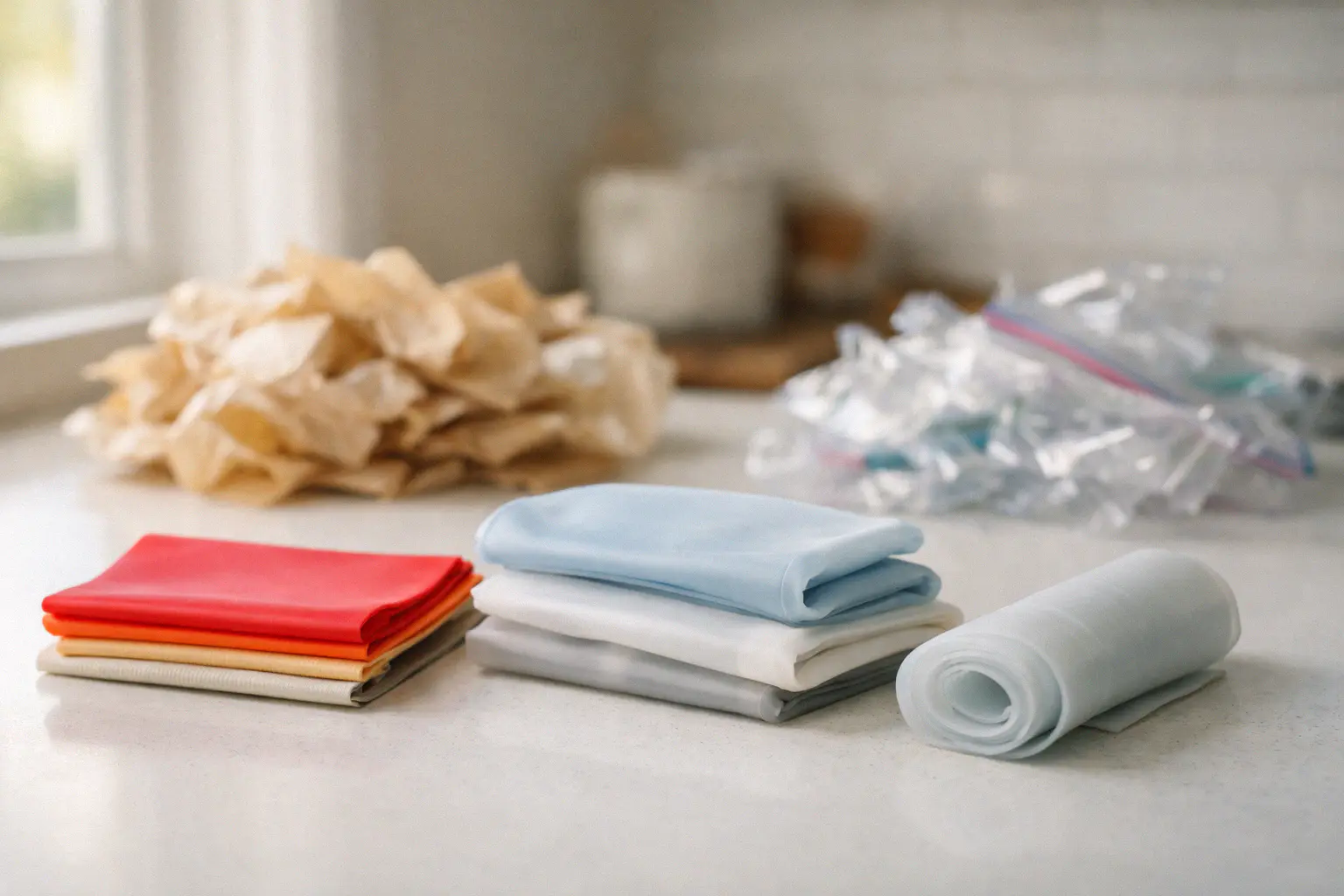
To put it in perspective, one family switching from disposable to silicone bakeware and food storage can eliminate roughly 500 pieces of single-use kitchen plastic per year. Over a 10-year product lifespan, that's a meaningful reduction in household waste.
Yes, when you buy 100 percent pure, FDA-compliant silicone from reputable manufacturers — the safety concerns apply to cheap products with undisclosed plastic fillers, not properly certified food-grade silicone.
Safety questions have gotten louder as silicone has gotten more popular. The real answer depends on regulatory standards, emerging research, and one critical distinction: pure silicone versus products cut with cheaper filler compounds.
The FDA first approved food-grade silicone for direct food contact back in 1979. CFR 177.2600 sets the purity standards for any silicone classified as a food contact material -- cooking, baking, storage, serving.
Under that regulation, food-grade silicone has to remain chemically inert across its full rated temperature range. The FDA hasn't tightened or walked back this approval in the decades since, and it still classifies properly manufactured food-grade silicone as safe for consumers.
The European Food Safety Authority (EFSA) and Health Canada both maintain equivalent approvals. Three independent agencies, three different testing methodologies, same conclusion. That kind of consensus carries weight.
A 2023 study in Environmental Science and Technology found that silicone kitchen products can release micro and nanoparticles during normal use. That challenged the long-standing assumption that silicone is completely inert under all conditions.
Researchers found particle release during heating, freezing, and mechanical stress like scraping and bending. Worth noting, though: the study's authors pointed out that silicone particles are structurally and chemically different from petroleum-based microplastics, and health implications still need more investigation before anyone can draw firm conclusions.
The Center for Environmental Health (CEH) published similar findings in their analysis of silicone cookware safety, noting that even high-quality silicones may shed particles over time. Their guidance recommends choosing 100 percent pure silicone products and avoiding heat exposure beyond rated limits to minimize any potential release.
This area of research is still active and evolving. What the current evidence does confirm is that pure, high-quality silicone sheds far fewer particles than plastic under identical conditions — and those particles carry a fundamentally different chemical profile.
Not everything labeled "silicone" is pure silicone. Budget manufacturers regularly blend plastic fillers into the compound to cut costs, and those fillers bring chemical leaching risks at high temperatures that pure silicone dodges entirely.
Here's a quick way to check — pinch and twist a flat section of the product between your fingers, and if white coloring shows up at the stress point, it contains fillers. Pure silicone holds its uniform color no matter how much you twist it.
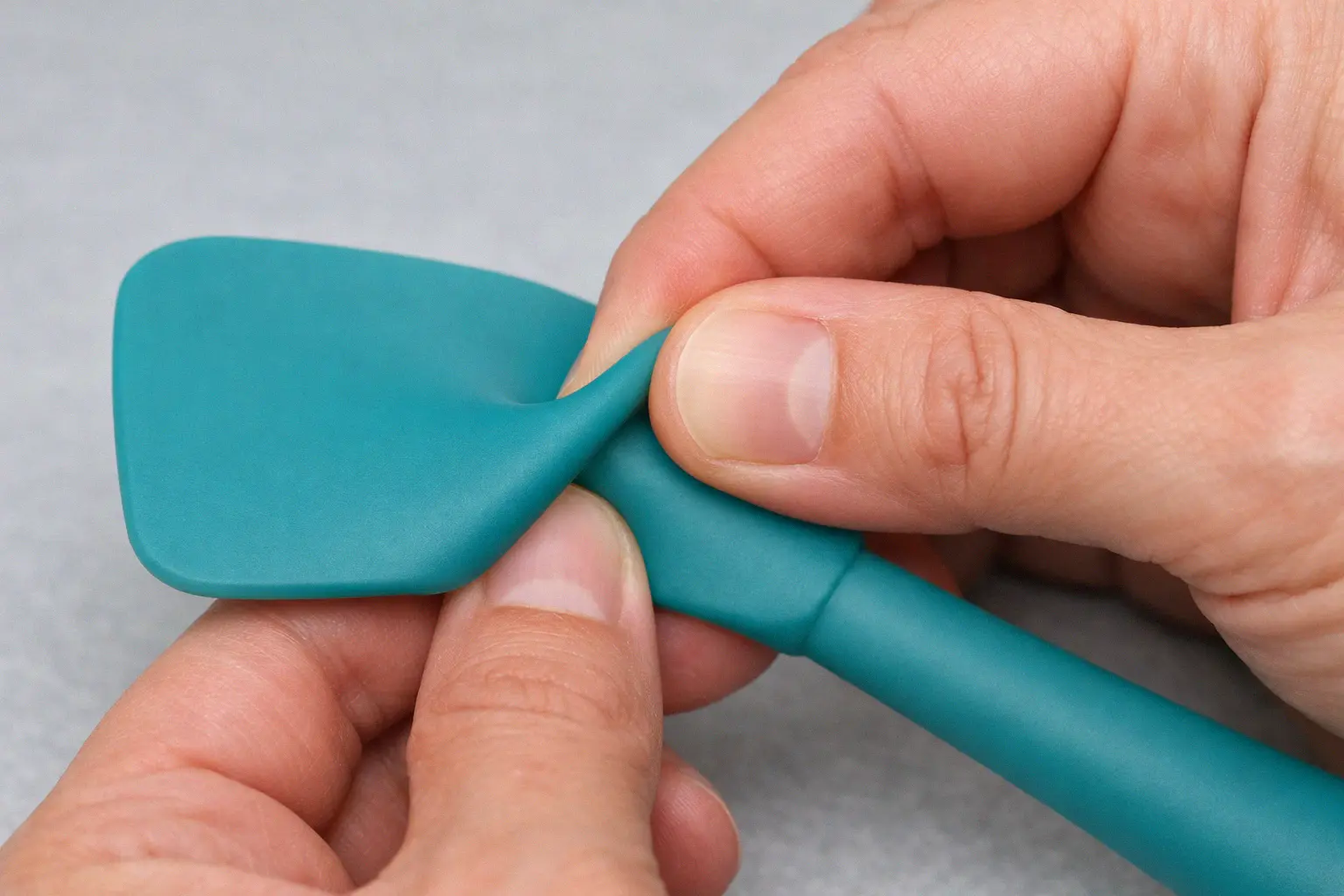
Products labeled 100 percent food-grade silicone or platinum-cured silicone consistently pass this test. Steer clear of anything described as silicone blend or any product that omits material composition details from its listing entirely.
Standard food-grade silicone stays chemically stable up to 428 degrees Fahrenheit (220 Celsius). Premium platinum-cured formulations push that to 500 or 600 degrees, depending on how they were made.
Exceeding the rated temperature won't melt silicone the way it melts plastic -- instead, it triggers slow chemical degradation that can release trace volatile organic compounds. Staying within the manufacturer's stated range avoids the issue entirely.
Absolutely — food-grade silicone is chemically non-reactive, so it won't interact with acidic ingredients like tomato sauce, citrus juice, vinegar, or wine-based reductions. Unlike unlined aluminum or copper cookware, silicone doesn't leach metallic flavors or discolor when exposed to acids during cooking or food storage.
For most kitchens, silicone hits the best balance: safer than plastic, gentler on cookware than metal, tougher than wood, and more heat-resistant than nylon.
Every kitchen material involves trade-offs. Here's where silicone wins and where others still have the edge.
| Feature | Silicone | Wood | Stainless Steel | Plastic | Nylon |
|---|---|---|---|---|---|
| Max Temperature | 500–600°F | 350°F (scorches) | 1,500°F+ | 250–350°F | 400°F |
| Non-Stick Safe | Yes | Yes | No (scratches) | Yes | Yes |
| Dishwasher Safe | Yes | No | Yes | Varies | Varies |
| Stain Resistant | Yes | No | Yes | No | Moderate |
| BPA-Free | Yes | Yes | Yes | Not always | Not always |
| Flexibility | High | None | None | Moderate | Moderate |
| Lifespan | 5–10 years | 2–5 years | 10+ years | 1–2 years | 2–3 years |
| Weight | Light | Medium | Heavy | Light | Light |
| Microplastic Risk | Under study | None | None | Confirmed | Confirmed |
| Flavor Absorption | None | Moderate | None | High | Moderate |
Stainless steel wins on raw durability and maximum temperature ceiling, but it scratches every non-stick surface it touches. Wood offers zero microplastic risk and a traditional aesthetic, but it absorbs moisture, stains permanently, and needs hand washing after every use.
Plastic and nylon cost less upfront but degrade faster, carry confirmed microplastic concerns, and absorb odors that transfer between dishes. Silicone lands in the practical middle ground: safer than plastic, gentler than metal, longer-lasting than wood, and more heat-resistant than nylon.
If your kitchen has mixed cookware — stainless steel pots, non-stick pans, cast iron skillets, and ceramic baking dishes (paired with a silicone roasting rack for oven use) — silicone is the only material that works safely across every surface without needing a separate set of tools for each type. That versatility alone justifies the slightly higher price tag for many home cooks.
The long-term cost comparison favors silicone too. A $15 silicone spatula that lasts 8 years costs less per year of service than a $5 plastic spatula replaced every 18 months.
Five things matter: FDA food-grade certification, the pinch test for purity, one-piece seamless construction, the right heat rating, and a brand you can actually verify.
Quality in the silicone kitchen market ranges from excellent to genuinely unsafe. These five checks separate stuff worth buying from stuff that belongs back on the shelf.
Look for clear "FDA-approved," "food-grade silicone," or "FDA-compliant" language on the packaging or listing. Reputable brands put their certification status front and center and will provide safety documentation if you ask.
Stay away from products with zero material certification, especially from unfamiliar sellers on Amazon or similar marketplaces. No certification language is the single biggest red flag when shopping for silicone.
Before buying — or right after delivery — perform the pinch test on any silicone product you can physically inspect. Grip a flat section firmly between your thumb and forefinger, then twist.
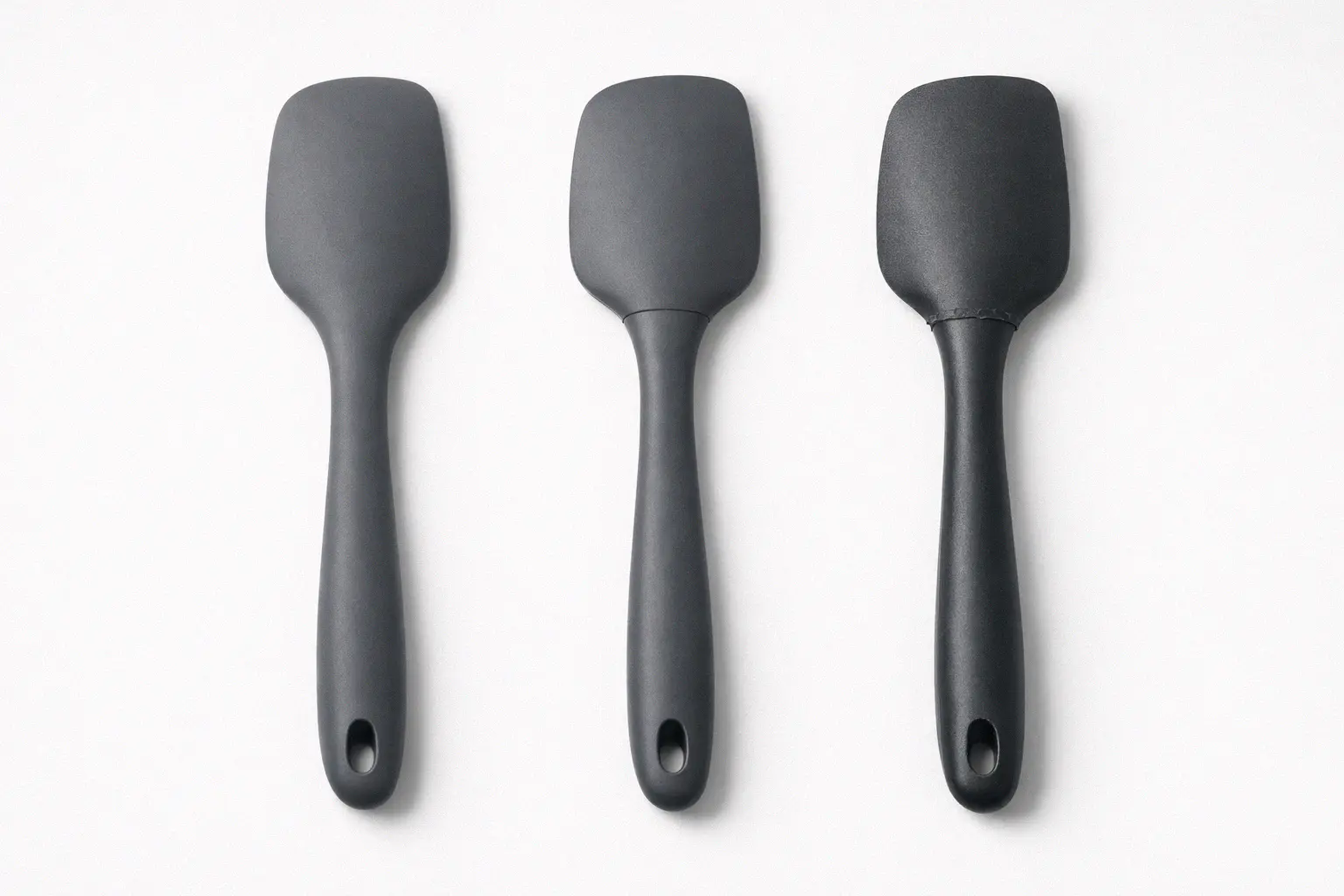
Pure silicone maintains its uniform color under stress, but if plastic fillers are mixed in, you'll see white discoloration at the twist point. Return any product that fails, regardless of what the listing claims about its material composition.
One-piece seamless construction beats two-piece designs where a silicone head plugs into a separate handle. Those seams trap food, let water leak into the handle cavity, and loosen up after enough trips through the dishwasher.
Stainless steel internal cores add rigidity to spatulas and turners without adding much weight. They fix the floppy-spatula problem that plagues all-silicone tools with no internal reinforcement.
A baker who rarely exceeds 375 degrees Fahrenheit can use virtually any food-grade silicone product. But a home cook who sears steaks in cast iron or stir-fries at high heat needs tools explicitly rated to 500 degrees or above.
Always check the manufacturer's specific temperature rating rather than assuming all silicone performs the same. Ratings vary by product type, silicone formulation, and curing method — and using a tool beyond its rated limit defeats the whole point of choosing silicone.
Established brands -- OXO, GIR, di Oro, Le Creuset, StarPack -- invest in material testing, quality control, and warranty programs. You pay more up front, but you get consistent performance, real food-grade certification, and actual customer support if something goes wrong.
Generic and unbranded products need more homework from you. Dig into reviews that mention long-term durability, heat performance under real cooking conditions, and whether there were any chemical or off-gassing odors on first use.
The names that keep coming up across price tiers: GIR, OXO Good Grips, di Oro, Le Creuset, StarPack, and The Silicone Kitchen.
The market has matured enough at this point that there are clear brand leaders across categories and budgets.
GIR (Get It Right) built its reputation on seamless one-piece construction using platinum-grade silicone. Their spatulas, spoons, and turners rank among the most recommended by professional kitchen testers, with temperature ratings reaching 550 degrees Fahrenheit across the product line.
OXO Good Grips pairs silicone cooking surfaces with ergonomic, non-slip handles designed for comfort during extended use. Their SoftWorks line of flexible turners consistently tops independent comparison tests for edge performance and durability.
di Oro Living plays at the premium end of the silicone utensil market, with FLEX turners and spatulas engineered for maximum flexibility. They back everything with lifetime warranties and maintain strict 100 percent food-grade silicone sourcing across every product.
Le Creuset brings its heritage cookware reputation to silicone tools designed to complement their enamel and non-stick cookware lines. You'll pay a premium, but you get brand-matched color options and premium construction throughout.
StarPack targets the value-conscious buyer with utensil sets that deliver solid performance at lower price points. Their XL-size products and heat-resistant silicone (up to 480 degrees Fahrenheit) make a strong entry point for anyone building out a silicone kitchen collection for the first time.
The Silicone Kitchen specializes exclusively in silicone products — baking cups, mats, spatula sets, and even prep bowls — made from 100 percent food-grade silicone with no fillers. Their focused product line appeals to buyers who prioritize material purity above all else.
One important note regardless of brand: always verify individual product certifications rather than assuming every item in a lineup meets the same standard. Product lines evolve, and not every SKU necessarily shares the same silicone grade as the flagship items.
More and more, yes. Commercial kitchens stock silicone spatulas, whisks, and baking mats because they survive thousands of dishwasher cycles while protecting expensive non-stick and copper cookware that restaurants can't afford to keep replacing.
Silicone is about as low-maintenance as kitchen materials get. Warm soapy water for daily cleaning, baking soda or vinegar for the occasional stubborn odor. That's the whole routine.
Compared to wood, cast iron, or copper, silicone needs almost nothing from you. A few basic habits keep everything performing like new and push the usable life well past a decade.
Quick cleaning reference:
Warm soapy water and a soft sponge handle most cleaning jobs. The non-porous surface releases food residue easily — no aggressive scrubbing like you'd need with wood grain or scratched plastic.
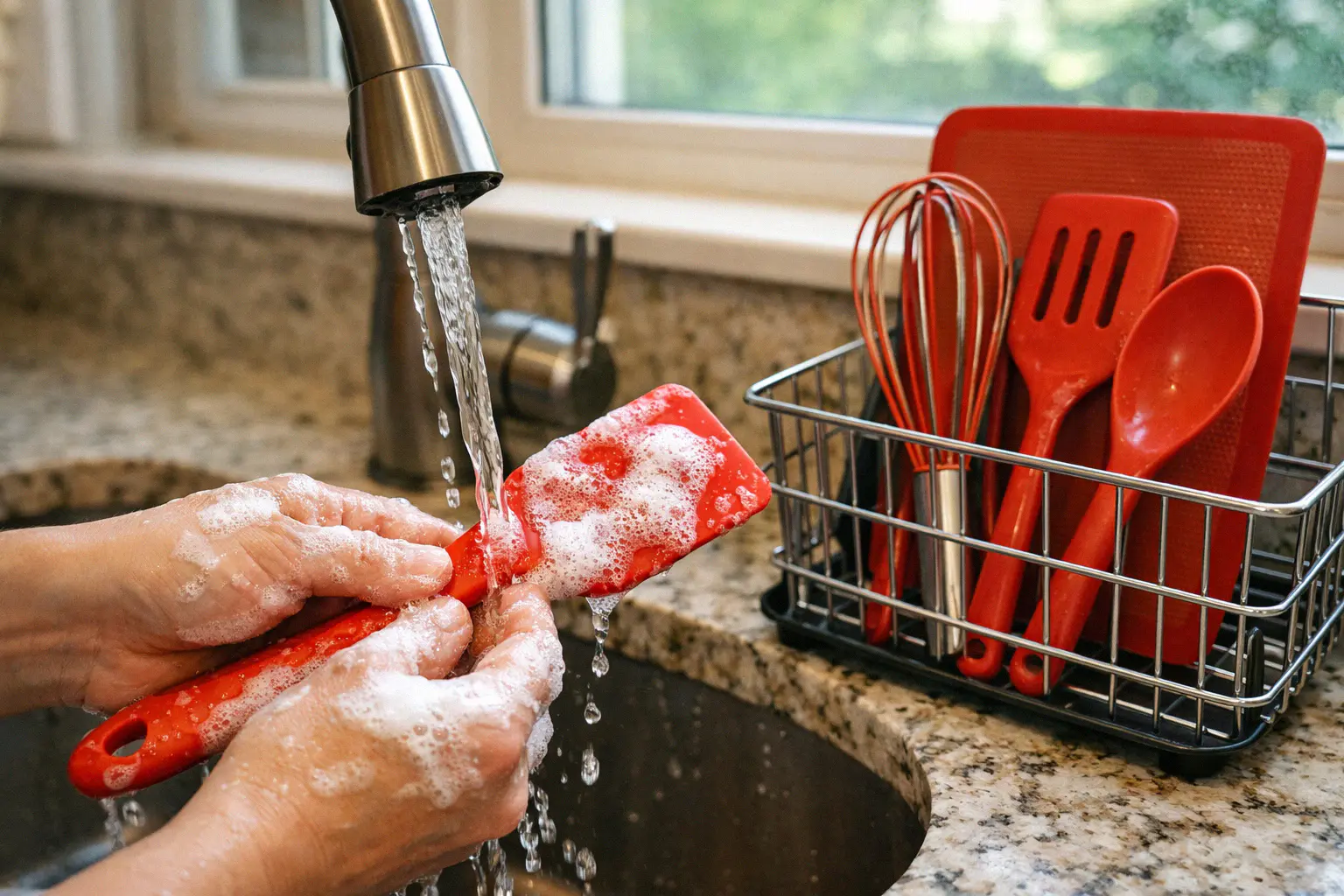
Dishwasher cleaning works great for all silicone products rated as dishwasher-safe by the manufacturer. Top rack away from the heating element is best practice, though quality silicone can easily handle the heat either way.
Garlic, fish, and strong curries occasionally leave lingering scents in silicone despite its non-porous surface. Soaking the affected item in a paste of baking soda and warm water for 60 minutes neutralizes these odors effectively.
For extreme cases, boiling silicone tools in water with two tablespoons of white vinegar for 10 minutes knocks out even deeply embedded smells. This method is safe for all food-grade silicone and won't degrade the material.
Turmeric and beet juice stains respond well to direct sunlight exposure. Set a stained silicone mat, placemat, or mold in a sunny window for a few hours, and the discoloration bleaches out naturally without any chemical treatment.
Store silicone utensils in a countertop caddy or drawer where they can rest in their natural shape. Prolonged compression in a packed drawer may cause temporary warping, though silicone recovers its form once the pressure lifts.
Keep silicone bakeware flat-stacked or gently rolled rather than tightly folded. Sharp creases in thin silicone mats can weaken the material at the fold line over hundreds of use-wash-store cycles.
Replace any silicone product that develops visible tears, permanent tackiness on its surface, or an unusual chemical smell during heating. A sticky or tacky texture means the silicone compound is degrading, and it shouldn't contact food at cooking temperatures anymore.
A quality silicone spatula or baking mat under normal household use typically reaches the 5 to 10 year mark before showing any signs of wear. Products that fail significantly earlier almost certainly contained fillers or never met true food-grade specifications to begin with.
Silicone outperforms plastic in heat resistance, chemical stability, and functional lifespan. Plastic utensils soften and warp between 250 and 350 degrees Fahrenheit and are confirmed to shed microplastics into food during cooking.
Silicone remains structurally and chemically stable up to 500 degrees or higher, with microplastic research still ongoing but structurally distinct from petroleum-based particles.
FDA-approved, 100 percent food-grade silicone does not leach chemicals at normal cooking temperatures. Products containing plastic fillers or those used above their rated temperature ceiling may release trace compounds.
Performing the pinch test before use identifies pure silicone products from filler-laden alternatives.
Silicone utensils and bakeware contain no PFAS, PTFE, or PFOA, which are chemicals of concern in certain non-stick pan coatings. Both materials carry FDA approval for food contact, but silicone avoids the coating degradation risks that occur when non-stick surfaces get scratched, overheated, or worn through repeated use.
Food-grade silicone is fully microwave-safe — the material doesn't absorb microwave radiation, so it stays cool while the food inside heats. Silicone containers, stretch lids, steamer baskets, plates, and egg poaching pods all function safely in the microwave without melting, warping, or off-gassing.
Check the product label or listing for FDA-approved, food-grade silicone, or 100 percent silicone language. Then perform the physical pinch test: twist a flat section firmly between your fingers.
Pure food-grade silicone maintains its uniform color throughout. Products with fillers reveal white stress marks at the twist point, indicating mixed materials.
A single silicone baking mat priced between $10 and $25 replaces thousands of sheets of disposable parchment paper over its functional lifetime. The mat pays for itself within two to three months of regular baking.
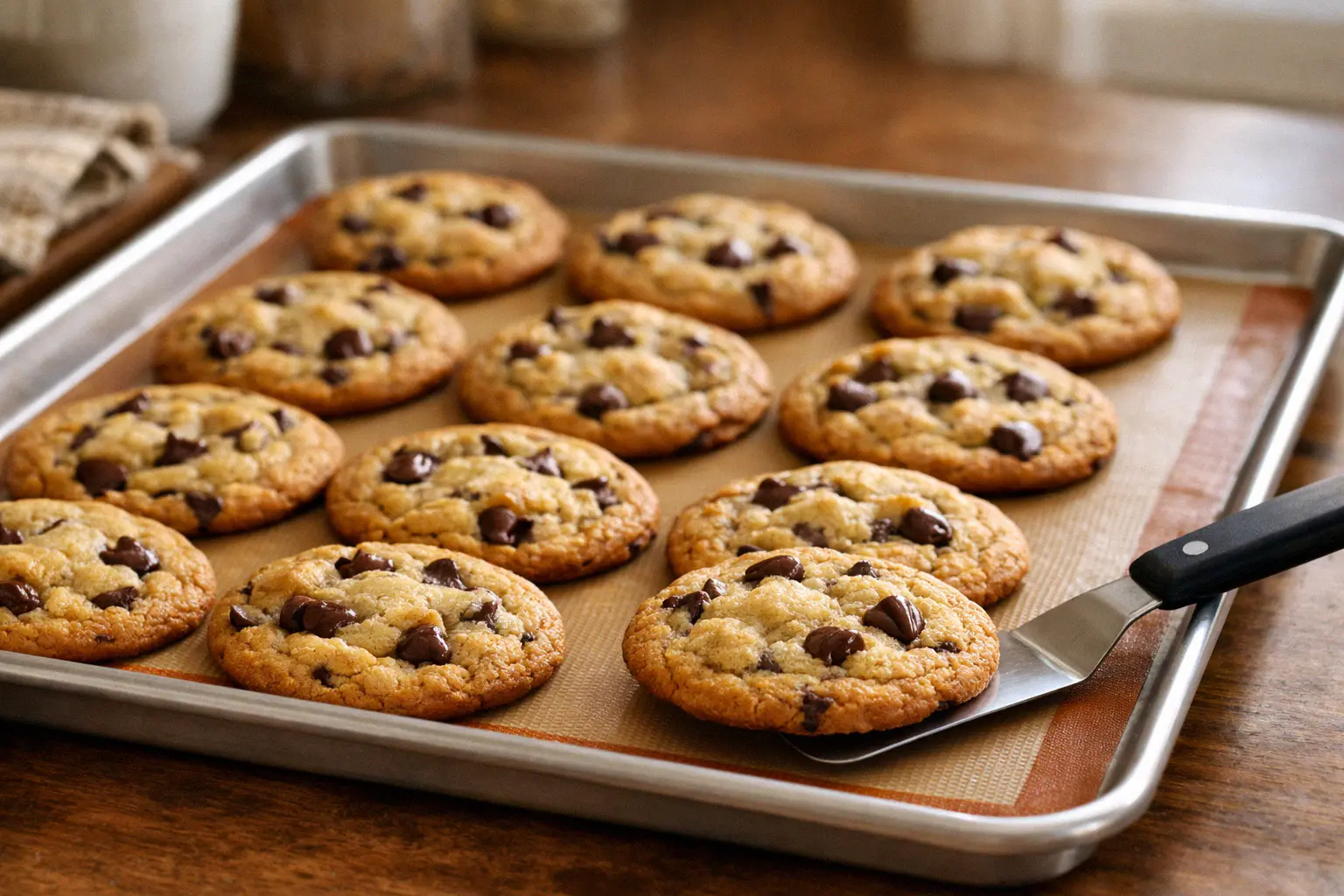
On top of that, silicone mats deliver more consistent heat distribution across the baking surface than parchment provides.
Silicone earned its spot as the go-to kitchen material for good reason. It handles extreme temperatures, protects your cookware, cleans up in seconds, and outlasts the materials it replaces by years.
The trick is buying smart. Stick with 100 percent food-grade or platinum-cured silicone from brands you can verify, run the pinch test on anything that looks questionable, and stay within the rated temperature range. Do that, and your silicone tools will be the last things in your drawers you need to replace.
 roundup
 Silicone chopsticks rated for cooking heat up to 446F, non-scratch tips, and grip. 12-inch cooking pairs and kid training sets ranked across brands.
 roundup
 Silicone round cake pans flex to release layered, cheesecake, and chocolate bakes without greasing. We tested 10 picks in sizes from 6 to 10 inches.
 roundup
 Silicone straw tips cushion metal straws and protect your teeth. We ranked 10 picks by universal fit, food-grade safety, and tumbler sizing.
 roundup
 Silicone tray molds turn epoxy resin into serving boards, rolling trays, and trinket dishes. We ranked the 10 best by size, flex, and clean release.
 roundup
 Strawberry silicone molds for chocolate, fondant, soap, and resin ranked by seed detail, clean release, and durability across 10 tested shapes.
 roundup
 We tested 7 silicone wine glasses over 3 months of outdoor use. See which ones held up best on taste, durability, and drop protection for your patio.
 roundup
 Home bakers who want clean cake releases without greasing should start with a quality silicone mold. We tested 10 top picks for shape and heat rating.
 roundup
 Silicone pizza pans deliver crispy crust with zero sticking and easy cleanup. We ranked 10 picks including perforated mats, cavity pans, and rollers.
 roundup
 10 silicone chess piece sets reviewed for weight, feel, and tournament readiness. From federation regulation sets to budget wholesale combos.
 roundup
 Collapsible silicone strainers fold flat and save cabinet space. We tested 10 top picks for mesh size, durability, and draining speed in daily use.
 roundup
 Silicone placemats for toddlers with suction grip keep plates stuck to the table. We tested 10 picks including the EZPZ Happy Bowl for messy eaters.
 roundup
 10 silicone burger presses reviewed for even patties with zero mess. Our top pick shapes 8 patties at once and doubles as a freezer storage tray.